Exploring Artists Painting Silhouettes Vector Art: A Unique Visual Medium
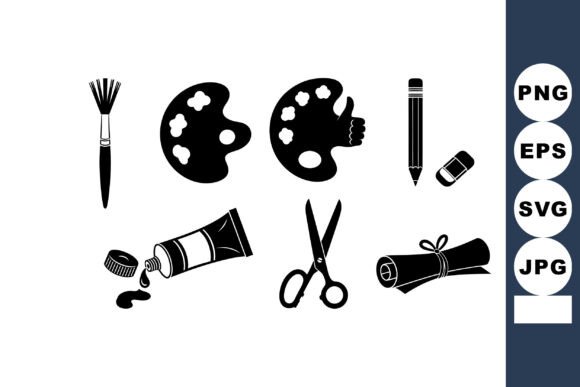
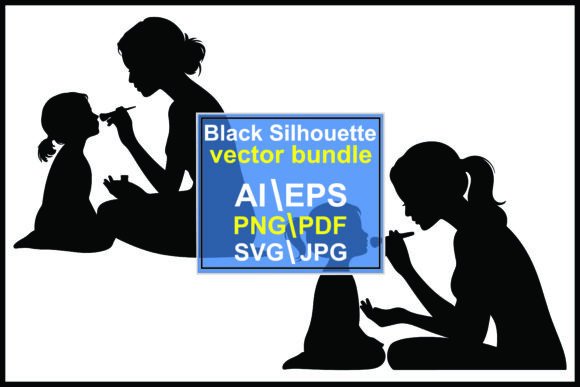
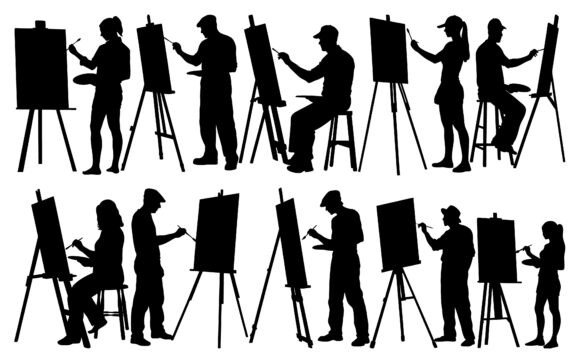
Artists Painting Silhouettes Vector Art presents a minimalist yet expressive form of visual storytelling. This style features black silhouettes of individuals engaged in the act of painting, typically set against a white backdrop. Each figure is depicted in a variety of poses—some standing, others seated—capturing the essence of creative focus. The simplicity of the silhouette contrasts sharply with the complexity of the artistic process it represents, making this type of vector art both visually compelling and conceptually rich.
What Sets Artists Painting Silhouettes Vector Art Apart?
Unlike detailed illustrations or photographic depictions of artists at work, Artists Painting Silhouettes Vector Art strips away color, texture, and facial expression to focus on gesture and form. This reduction to essential shapes allows for a universal representation of creativity that transcends individual identity. The use of vector graphics ensures scalability without loss of quality, making these images ideal for digital and print applications alike.
The stark contrast between black silhouettes and a white background enhances visual clarity, offering a clean aesthetic suited for educational materials, branding projects, and inspirational content. This design choice also makes the imagery adaptable across various color schemes and layouts, supporting flexible integration into websites, presentations, and marketing collateral.
Comparing Artists Painting Silhouettes Vector Art to Similar Visual Styles
When compared to other forms of artistic imagery, such as detailed portraits or abstract representations of creativity, Artists Painting Silhouettes Vector Art offers a middle ground—structured enough to convey specific actions and roles, yet abstract enough to remain open to interpretation. Traditional illustrations may provide more detail but often sacrifice versatility, while abstract art can feel too vague for practical use in branding or instructional contexts.
- Photographic references: While photos offer realism, they lack the stylized flexibility of vector silhouettes. Real-world images are often limited in scalability and may require licensing, whereas vector art is typically royalty-free and infinitely editable.
- Cartoon-style illustrations: These can be expressive but may not suit professional or minimalist design needs. Silhouettes maintain a neutral tone that appeals to a broader audience.
- Abstract shapes and symbols: These are useful for evoking emotion or movement but may not clearly communicate the concept of artistic creation. Silhouettes, by contrast, directly reference the act of painting and creation.
Strengths of Artists Painting Silhouettes Vector Art
The primary strength of this style lies in its ability to convey the idea of creativity without being overly specific. It serves as a symbolic representation of artists in action, making it suitable for a wide range of applications including:
- Website banners and headers for creative businesses
- Educational infographics about the artistic process
- Branding elements for art schools, galleries, and workshops
- Presentation slides for talks on design, innovation, and creativity
Because the imagery is vector-based, it can be easily customized in size, color, and layout without degradation. This adaptability makes it a practical choice for designers and content creators who need high-quality visuals that can be reused across multiple platforms.
Tradeoffs and Limitations
Despite its many benefits, Artists Painting Silhouettes Vector Art may not be the best fit for every project. Its minimalist approach can sometimes lack the emotional depth or narrative richness that more detailed illustrations or photographs provide. For example, if the goal is to highlight specific artists, cultural diversity, or personal expression, a more detailed or photographic approach may be more effective.
Additionally, because silhouettes are inherently abstract, they may not resonate as strongly with audiences seeking realism or emotional connection. In branding or marketing contexts where storytelling plays a central role, more expressive visuals may be necessary to engage viewers on a deeper level.
When Artists Painting Silhouettes Vector Art Is the Right Choice
This style is particularly well-suited for projects that require a clean, modern aesthetic with a focus on the act of creation rather than the individual artist. It works well in:
- Corporate design systems that emphasize innovation and creativity
- Online learning platforms offering art and design courses
- Marketing materials for art supplies, digital tools, or creative software
- Exhibition signage and gallery promotional materials
Designers and educators looking for scalable, royalty-free imagery that communicates the essence of artistic work will find Artists Painting Silhouettes Vector Art to be a valuable asset. Its neutrality allows for easy integration into a wide variety of color schemes and design systems, ensuring consistent visual communication across mediums.
When Another Option Might Be Better
If the goal is to highlight specific individuals, cultural diversity, or emotional expression, alternative visual styles may be more appropriate. For instance, a campaign celebrating the work of female artists or showcasing the diversity of contemporary creators may benefit from realistic portraits or stylized character illustrations.
Similarly, if the content is aimed at younger audiences or requires a playful tone, cartoon-style visuals or illustrated characters may be more engaging than the more formal and abstract silhouette format. In these cases, the emotional resonance and personality conveyed through detailed facial expressions or colorful designs can enhance the overall impact of the message.
Practical Examples and Use Cases
Consider a digital art tutorial website that uses Artists Painting Silhouettes Vector Art in its interface. The silhouettes could represent different types of artists—painters, illustrators, graphic designers—each engaged in their craft. These icons help users quickly identify content categories without overwhelming the interface with detail.
In contrast, a museum exhibition focusing on the life and work of Frida Kahlo would likely benefit from photographic or detailed illustrations rather than abstract silhouettes. In that context, specificity and emotional depth are key to connecting with the audience.
Another example is a startup that offers online painting classes. The company might use silhouettes in its marketing materials to represent the universality of artistic expression, while also incorporating real user photos in testimonials to build trust and relatability.
Making an Informed Choice
Choosing the right visual style depends on the intended message, target audience, and design context. Artists Painting Silhouettes Vector Art offers a clean, adaptable, and universally recognizable representation of creativity. It is particularly effective when the focus is on the act of creation rather than the artist’s identity.
However, it’s important to consider the broader narrative and emotional tone of the project. If deeper engagement, personalization, or storytelling is required, alternative visual approaches may be more effective. As with any design decision, the key is to align the visual style with the content’s purpose and the audience’s expectations.
By understanding the strengths and limitations of Artists Painting Silhouettes Vector Art, designers, educators, and content creators can make more informed decisions about when and how to incorporate this distinctive style into their work.